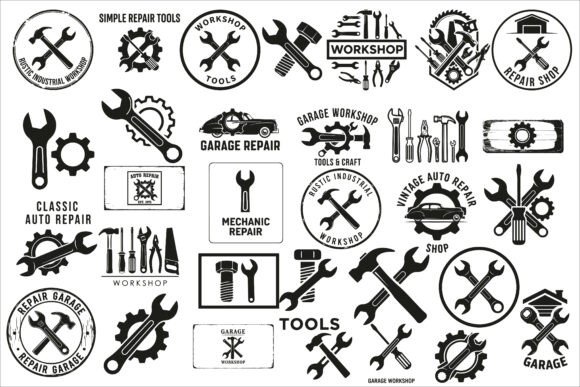
Classic Garage Workshop Sign Design
First Impressions: Rustic Charm, Clear Intent
When I opened Classic Garage Workshop Sign Design, I didn’t see just another vector graphic—I saw a mood. It’s warm, grounded, and quietly confident: bold lettering with subtle tool silhouettes, balanced negative space, and that unmistakable workshop authenticity. No clutter, no forced whimsy—just clean lines, intentional weight, and visual hierarchy that reads instantly at 8 inches or 24. As an embroidery designer who’s stitched hundreds of text-based signs for garages, sheds, and maker spaces, this one lands right where it should: legible, characterful, and built for real-world wear.
A Real Project Test: Embroidering a Heavy-Duty Tote Bag
Last week, I used Classic Garage Workshop Sign Design on a 16-oz canvas tote for a local mechanic’s shop launch. We chose a navy base with antique gold thread—not flashy, but rich and tactile. The design held up beautifully across the dense weave, especially because its layout avoids tight corners and ultra-thin serifs. The letterforms have enough stroke width to carry satin stitch without fraying or “bleeding” into the fabric. Even the small wrench and socket motifs stayed crisp thanks to thoughtful spacing and minimal internal detail—no tiny fill-stitch islands that would pucker or vanish on coarse texture.
Where It Shines (and Where It Needs Care)
Classic Garage Workshop Sign Design excels in medium-to-large applications: sweatshirt chest logos, apron pockets, pillow covers for man caves, tea towels for DIY kitchens, and framed wood plaques (when adapted for laser or Cricut use). Its balanced proportions make it forgiving on curved surfaces like caps—but only if you’re using a mid- to large-size hoop (5x7" minimum recommended). On stretchy fabrics like cotton jersey tees? Add light cutaway stabilizer and reduce stitch density slightly in the letter interiors. On dark fabric? Stick with high-contrast thread—cream, charcoal, or rust—rather than trying to force pale yellow or pastel.
It’s less ideal for baby embroidery or delicate nursery items. Not because it’s inappropriate—it’s not—but because the theme leans mature, and the scale doesn’t shrink gracefully below ~3.5". Tiny lettering here would lose definition; fine decorative accents (like the subtle rivet dots) could disappear entirely in fill stitch. Likewise, avoid layering it over thick seams or textured quilting—those details need breathing room.
What It Does for Your Craft Business
For Etsy sellers and small shop owners, Classic Garage Workshop Sign Design is a quiet value-builder. It reads as handmade *without* looking amateurish—critical when customers pay premium prices for custom apparel or personalized gifts. I’ve seen buyers comment directly: *“Looks like something my dad would hang in his garage—and that’s exactly why I bought it.”* That kind of emotional resonance boosts trust and repeat orders. It also scales well across product types: same file works for an embroidered patch, a heat-transfer-ready mockup, and a printable workshop branding kit—making it versatile design assets for your digital product store.
As a commercial embroidery designer, I appreciate how cleanly it separates from background fabric. No excessive underlay, no jagged vector edges that translate poorly to stitch paths. That means fewer client revisions, faster digitizing tweaks, and consistent results across batches—whether you’re embroidering 50 caps for a trade show or 5 custom sweatshirts for Father’s Day.
Practical Designer Notes Before You Stitch
- Always test first: Run a sample on scrap fabric matching your final product’s weight and texture—even if it’s just one letter and one tool icon.
- Check thread color contrast early: What looks balanced on screen may vanish on dark denim or blend into heather gray. Try black-on-cream and cream-on-navy side by side.
- Review stitch density: If your machine struggles with dense fills, simplify interior letter areas—some versions of this design include optional open-center variants. Confirm before purchase.
- Hoop size matters: Don’t force it into a 4x4 hoop unless the file includes a scaled-down version. Crowding causes tension issues and misalignment.
- Inspect small details: Zoom in on the file preview—do the rivet dots or gear teeth hold up at 100% zoom? If they blur or pixelate, they’ll likely stitch poorly.
- Mock it both ways: Generate black-and-white and full-color printable mockups. This reveals contrast issues and helps visualize placement on real products.
- Stabilizer choice is non-negotiable: Medium-weight cutaway for stable fabrics (canvas, twill), tear-away for lighter cottons, and fusible + tear-away combo for knits.
- Licensing check: Since this is a Graphics file in the Crafts category, verify whether your intended use—especially selling finished embroidered items or reselling digital versions—is covered. When in doubt, contact the seller.
Final Thought: It’s Not Just a Design—It’s a Vibe You Can Stitch
Classic Garage Workshop Sign Design doesn’t try to be everything. It knows its lane: honest, functional, proudly unpolished charm for people who value tools, time, and tangible work. That focus makes it reliable—not just as a machine embroidery design, but as a brand signal. Whether you’re stitching a holiday gift for your brother-in-law’s new garage, launching a line of workshop-themed aprons, or building digital embroidery files for your Etsy shop, this design delivers clarity, consistency, and quiet confidence. And in craft business, that’s worth more than perfect symmetry—it’s the difference between a project that ships and one that gets reworked three times.