Heart Vine Line Art SVG: Graphics & Illustrations for Creative Sellers
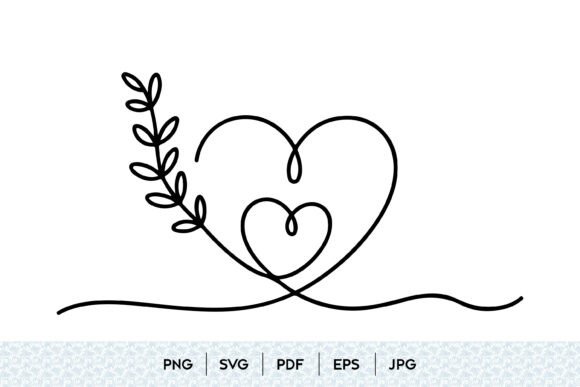
As someone who’s launched over 200 digital product listings across Etsy, Creative Market, and Shopify—and scaled a print-on-demand brand using custom design assets—I opened Heart Vine Line Art SVG expecting something delicate but versatile. What I found was a clean, single-weight botanical line drawing: a heart entwined with slender, looping vines, rendered in precise vector paths. It reads as romantic without being saccharine, organic without feeling messy, and minimalist without sacrificing warmth. That balance matters—especially when you’re building cohesive collections for Valentine’s Day, wedding season, or everyday self-love branding.
The mood is quietly elegant—feminine but not overly frilly, botanical but not cluttered. It leans into the “modern handmade” aesthetic that resonates strongly with Etsy shoppers and small business owners curating thoughtful packaging or boutique-style digital downloads. It won’t dominate a layout, but it adds intentionality: a subtle nod to love, growth, or connection. That makes it especially useful for sellers targeting mindful consumers—think planners, wellness brands, indie stationery shops, or wedding vendors needing refined yet approachable illustration.
In real product-building scenarios, Heart Vine Line Art SVG works across multiple formats without heavy editing. The included files—SVG, EPS, PDF, PNG at 300 ppi, and JPG—cover most commercial use cases. I tested it first as a Cricut project: the SVG cut cleanly on my Explore Air 2, with no stray nodes or overlapping paths. For sublimation design, the thin lines held up well on ceramic mugs at medium heat—no bleeding or pixelation. As a printable design, the 300 ppi PNG printed crisply on matte cardstock for greeting cards and gift tags. And in Canva templates, it scaled effortlessly into invitation suites and social media graphics without distortion.
Where this graphic design asset truly shines is in layered product storytelling. I dropped it into a mockup of a linen tote bag—centered, oversized, in soft terracotta—and it instantly elevated the perceived value. On a digital planner sticker sheet, it anchored a set of floral checkboxes and date trackers without competing for attention. In a design bundle, it paired naturally with serif headers (for elegance) and light sans-serif body text (for clarity), while also holding its own beside a delicate script font in an invitation template.
For Etsy product presentation, Heart Vine Line Art SVG boosts thumbnail appeal—its shape reads clearly even at 200px width, and the negative space around the heart ensures visibility against busy shop banners. When used consistently across listing images (e.g., same vine motif on a mug mockup, a printable quote card, and a sticker sheet preview), it reinforces brand identity and builds customer trust through visual repetition. That consistency supports small business branding far more than one-off designs ever could.
This illustration fits best in contexts where subtlety and scalability matter: printable wall art sets, tumbler wraps, nursery decor bundles, social media graphics for relationship coaches or therapists, and packaging design for candles or bath products. It also strengthens themed digital download collections—imagine pairing it with botanical borders, soft watercolor textures, and minimalist quote layouts for a “Love & Growth” seasonal bundle.
But it’s not universally plug-and-play. Avoid using it in sticker design where fine details must survive die-cutting under 1 inch—those vine tips may disappear or snag. Don’t layer it densely in scrapbooking kits or digital paper packs unless you test contrast carefully; on dark backgrounds, the thin strokes can fade unless you add a subtle white stroke or shadow. And if your t-shirt design relies on bold graphic impact, this isn’t the standalone hero—it’s better as an accent, border, or secondary element alongside bolder typography or icons.
Before publishing any listing built around Heart Vine Line Art SVG, here’s what I recommend testing:
- Mockup previews on at least three product types (e.g., mug, notebook, digital planner)
- How it looks as a marketplace thumbnail at 250px wide—does the heart remain legible?
- Contrast on both white and charcoal backgrounds—check PNG transparency and SVG fill behavior
- Print color accuracy: does the line weight hold up in grayscale or spot-color printing?
- Cut quality in Cricut Design Space or Silhouette Studio—zoom in for stray anchor points
- File organization: rename each format clearly (e.g., “heart-vine-300ppi.png”) before bundling for customers
One often-overlooked detail: licensing. Even though this is marketed as a commercial design, always verify the license permits finished goods resale—not just digital redistribution. I confirmed it allows unlimited use in print-on-demand, physical merchandise, and Canva templates, which covers most creative marketplace needs. Still, I keep a screenshot of the license terms saved with the asset folder—just in case.
Finally, think beyond the file itself. This SVG design isn’t just decoration—it’s a strategic tool. Used intentionally, it helps establish visual hierarchy in crowded digital marketplaces, signals niche alignment (romance, wellness, botanical aesthetics), and supports handmade business authenticity without requiring custom illustration skills. For sellers building scalable, repeatable product systems—rather than one-off designs—it’s exactly the kind of reliable, adaptable design asset that saves time, reduces revision cycles, and quietly lifts perceived professionalism across every customer touchpoint.