Elegant Layered Flower Cutting File
First Impression: Delicate, Refined, and Instantly Recognizable
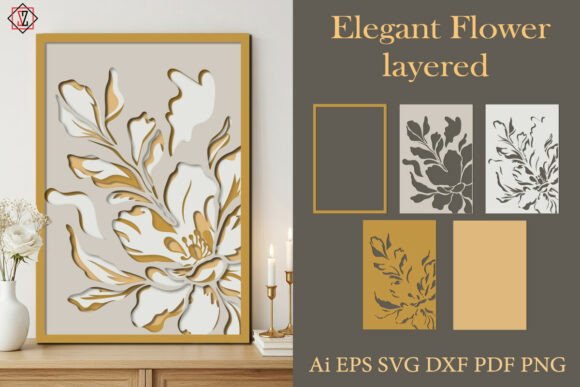
When I opened Elegant Layered Flower Cutting File, what struck me first wasn’t just the floral motif—it was the *intentionality* behind the layering. Four distinct tonal elements—light gray, white, dark gold, and light gold—aren’t just color choices; they’re visual cues for depth, dimension, and hierarchy. This isn’t a flat silhouette or a generic bloom. It’s a composed, balanced composition that reads as both timeless and quietly modern. The petals have gentle curvature, not sharp edges; the center has subtle texture without overcomplication. As a designer who regularly selects embroidery files for client work, I immediately pictured this on a linen tea towel, a cream-colored baby onesie, or the front pocket of a structured canvas tote. It feels like something people pause to admire—not because it shouts, but because it invites closer looking.
A Real-World Test: Stitching It on a Linen Apron for a Boutique Kitchen Brand
Last week, I used Elegant Layered Flower Cutting File as the centerpiece for a limited-run embroidered apron line for a local artisan bakery. The fabric was medium-weight natural linen—textured, slightly uneven, and unforgiving with dense stitching. I chose a 5-inch hoop and paired it with medium-cutaway stabilizer underneath and a light tear-away on top. What stood out in practice: the light gray layer acted as a graceful underpainting, grounding the white and gold elements without competing. The dark gold gave rich definition to stems and petal veins, while the light gold added luminosity—not shimmer, but warmth. Customers responded strongly to how “hand-finished” it looked, even though it was machine-stitched. That’s the mark of a well-structured machine embroidery design: it mimics craftsmanship without demanding handwork.
Where It Shines—and Where It Needs Thoughtful Handling
Elegant Layered Flower Cutting File excels in applications where elegance and clarity matter most: personalized gifts (think monogrammed pillow covers or wedding guest towels), boutique apparel (sweatshirt embroidery on ivory French terry), and small shop merchandise like embroidered patches or kitchen towels. Its layered structure translates beautifully into satin stitch and fill stitch zones—no jagged transitions or awkward gaps between tones. On dark fabric? It holds up exceptionally well when stitched with high-contrast thread colors, especially if you preview the digital embroidery file in grayscale first. On light fabrics, the white and light gold layers read cleanly without ghosting.
But—and this is critical—don’t rush it onto stretchy knits or thin voile without testing. The detail density in the flower’s center can overwhelm lightweight fabrics or cause puckering if stabilizer choice is off. Curved surfaces like caps require careful hooping and possibly slight digitizing tweaks (if you have editing access). And while it’s stunning at 4–5 inches, scaling below 3 inches risks losing distinction between the light gray and white layers—especially on textured fabric. For baby embroidery or holiday embroidery on delicate items, I’d recommend using it at full size or slightly reduced—not miniaturized.
How It Elevates Your Finished Product—Beyond Aesthetics
This isn’t just about prettiness. Elegant Layered Flower Cutting File subtly lifts perceived value. When customers see that nuanced layering on a handmade product, they register care, intention, and quality—even before touching the fabric. That builds trust. For Etsy sellers and craft business owners, that translates directly to higher conversion and fewer returns due to “not what I expected.” It also strengthens brand consistency: imagine using the same floral motif across a set of nursery decor pieces, matching tea towels, and custom gift tags. The cohesion feels curated, not accidental. And because the tone is warm but restrained—not overly romantic or fussy—it works across seasons and occasions: spring baby showers, summer weddings, fall home goods, winter gifting.
Practical Designer Notes Before You Stitch
- Always test first: Run Elegant Layered Flower Cutting File on scrap fabric that matches your final project’s weight, weave, and stretch.
- Check thread color contrast: Light gray against ivory or oatmeal can disappear—verify visibility in natural light and mockup photos.
- Review stitch density: Dense fill areas may need reduced density settings on heavier fabrics to avoid stiffness.
- Confirm hoop size compatibility: Measure your design’s widest point—some versions may push close to 5.5 inches, limiting use on smaller hoops.
- Inspect fine details: Zoom in on the file viewer—look for clean jump stitches and smooth satin edges around petal tips.
- Test black-and-white mockups: Helps spot tonal blending issues before committing to thread.
- Use proper stabilizer: Medium cutaway is ideal for most apparel; tear-away works well for stable home décor fabrics.
- Licensing matters: If you plan to sell finished products or resell the embroidery file as part of a digital bundle, confirm commercial use rights upfront—this is a Graphics category asset, so licensing varies by seller.
Final Thought: A Design That Works With You, Not Just On You
Many floral embroidery files feel either too busy or too sparse. Elegant Layered Flower Cutting File lands in that rare middle ground: detailed enough to hold attention, refined enough to age gracefully, and versatile enough to serve multiple roles across your craft business. It’s equally at home as an applique design on a denim jacket, a standalone patch for a backpack, or the focal point of a holiday embroidery collection. As someone who evaluates hundreds of designs a year for real-world embroidery projects, I keep returning to this one—not because it’s flashy, but because it’s reliable, beautiful, and thoughtfully built. That’s the kind of design assets that earn repeat customers, positive reviews, and quiet confidence every time you hit “start” on your machine.