Newborn Baby Nursery SVG
First Impression: Sweet, Soft, and Thoughtfully Composed
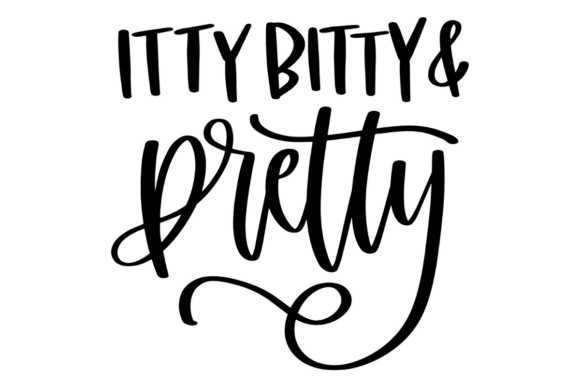
Opening the Newborn Baby Nursery SVG file, I immediately felt its intention: gentle celebration. It’s not loud or flashy—it leans into quiet tenderness with that “Itty Bitty Pretty” phrase rendered in a clean handwritten block font. The “ITTY BITTY” portion has just enough bounce to feel handmade, while the rest of the phrase softens into delicate script. There’s no heavy shadowing, no overwrought flourishes—just balanced negative space, consistent line weight, and a shape that reads clearly at a glance. This isn’t a design shouting for attention; it’s one whispering “welcome” beside a bassinet or stitched onto a folded receiving blanket.
A Real-World Test: Embroidering a Linen Baby Tote Bag
Last week, I prepped this design for a custom order: a 100% linen tote bag for a new mom’s hospital bag. Linen is unforgiving—loose weave, minimal stretch, and prone to puckering if stitch density or stabilizer isn’t dialed in. I hooped medium-weight cutaway stabilizer, layered the fabric taut (no wrinkles), and ran a test on scrap first. The Newborn Baby Nursery SVG held up beautifully: the “ITTY BITTY” letters stayed crisp, the script flowed without thread breaks, and the overall footprint sat comfortably centered on the tote’s front panel—neither cramped nor lost in the fabric’s texture.
Where It Shines—and Where It Needs Care
This design excels in projects where softness matters most: baby onesies, organic cotton swaddle blankets, muslin pillow covers, and nursery wall hangings. Its visual personality pairs naturally with neutral palettes—cream, oat, sage, and pale blush—so thread color choices feel intuitive, not stressful.
- Custom apparel: Works cleanly on sweatshirts and lightweight knits—but avoid high-stretch fabrics unless you reduce stitch density and add light tear-away underlay.
- Embroidered patch: A strong candidate for iron-on or sew-on patches, especially when backed with fusible webbing and finished with satin stitch edges.
- Tote bag design & tea towels: Excellent readability at 3–4 inches wide; scales down well to 2.5" for smaller items like kitchen towels or bibs.
- Caps & curved surfaces: Use caution—the script portion has subtle curves that may distort on tight-radius fronts. Stick to flat panels (back of cap, side of apron) unless testing thoroughly.
Fabric & Function: Know When to Pause
The Newborn Baby Nursery SVG walks a fine line between charm and practicality. On dark fabric? It reads best with high-contrast thread—think ecru on navy or white on charcoal—but check your fill stitch density first. Too dense, and it’ll stiffen the fabric; too sparse, and the script loses definition. On thin or delicate fabrics (like bamboo jersey or lightweight rayon), opt for reduced underlay and lighter stabilizer—this isn’t a heavy fill-stitch monster, but even gentle satin stitches need support.
I also noticed the inner corners of the “B” and “T” in “ITTY BITTY” are tighter than average. On textured fabrics—terry cloth, bouclé, or heavily napped fleece—those spots can trap lint or hide detail. If using on a baby towel or hooded blanket, consider simplifying those corners manually or adding a tiny running stitch accent to maintain clarity after washing.
What It Adds to Your Finished Product
As an embroidery designer who ships 200+ custom orders yearly, I judge designs by how they land with real customers—not just how they look on screen. This one lands softly but memorably. Parents don’t buy “cute text”; they buy meaning, warmth, and heirloom potential. The Newborn Baby Nursery SVG delivers that quietly. It elevates a plain onesie into a keepsake. It gives a boutique-branded tea towel emotional weight. And for Etsy sellers, it adds instant cohesion to a “New Arrival” collection—paired with simple floral motifs or minimalist animal silhouettes, it builds a recognizable, trustworthy aesthetic.
That said, it doesn’t scream “premium” on its own. To lift perceived value, pair it with thoughtful finishing: a matching embroidered tag, hand-folded packaging, or a printed care card explaining the thread quality and stabilizer used. That’s where craftsmanship meets commerce—and where your brand stands out from mass-produced digital embroidery files.
Designer Notes You’ll Actually Use
Before stitching your first client piece—or listing this as part of your craft business inventory—do these six things:
- Run a test on scrap fabric *exactly* matching your project’s base (linen, cotton knit, terrycloth).
- Check thread color contrast in natural light—not just under your machine lamp.
- Review stitch density: if the script looks muddy, reduce fill % slightly or increase stitch spacing by 0.1mm.
- Confirm hoop size compatibility—especially if layering with other elements (a tiny star, a monogram, or a birth date).
- Inspect small details in black-and-white mockups: does the “y” in “Pretty” read clearly when scaled to 2”? Does the dot on the “i” vanish?
- Verify licensing terms: this is a Graphics file intended for Crafts use—confirm whether your commercial embroidery license permits resale of finished physical goods or digital product previews.
Final Thought: A Design That Serves Its Moment
The Newborn Baby Nursery SVG isn’t built for trend-chasing. It’s built for the hush of a midnight feed, the crinkle of tissue paper around a tiny hat, the quiet pride of a first-time parent holding something made just for their child. As a designer, I reach for it when authenticity matters more than impact—and when every stitch needs to feel intentional, not incidental. Use it thoughtfully, test it honestly, and let its sweetness speak for itself. Because sometimes, the smallest designs carry the biggest heart.