Vintage Car Interior Steering Wheel Graphics for Crafts
First Impression: Rustic Charm with Mechanical Soul
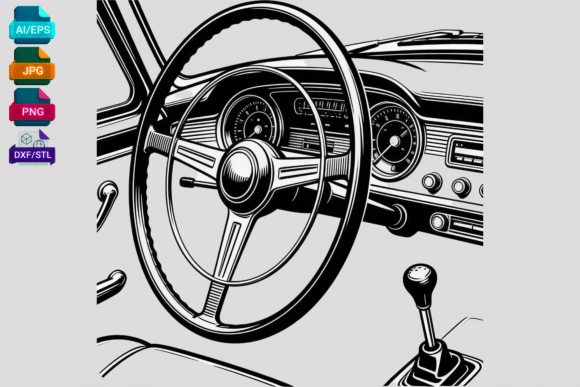
Opening the Vintage Car Interior Steering Wheel file bundle, I immediately felt its tactile weight—even digitally. The design isn’t just a silhouette; it’s a layered, detailed interpretation of aged leather, chrome spokes, and subtle wear marks. It reads as *hand-finished*, not algorithmically generated. For a local business, that nuance matters: it suggests authenticity, craftsmanship, and nostalgic warmth. This graphic design asset leans into rustic, masculine-adjacent, and artisanal—ideal for a small-batch candle brand using reclaimed wood containers, a vintage-themed coffee roastery, or a boutique auto-detailing service. It’s not playful or feminine, nor is it sleekly modern—it’s grounded, intentional, and quietly confident.
Where It Builds Real Local Business Brand Identity
I recently used Vintage Car Interior Steering Wheel for a seasonal packaging refresh for “Hillside Forge Candles”—a handmade business specializing in soy wax blends named after classic American road trips. We applied it as a foil-stamped accent on kraft paper labels, a die-cut window overlay on apothecary jars, and a repeating motif on thank-you cards tucked inside orders. Instantly, the brand felt more cohesive and memorable. That’s the power of a well-chosen graphic design asset: it strengthens first impression, adds shelf appeal among competitors, and deepens emotional connection without saying a word. Customers didn’t just recognize the logo—they recognized the *feeling* behind it: adventure, care, time-honored detail.
Practical Uses Across Touchpoints
- Product labels & packaging design: Works beautifully as a secondary brand mark—especially on jar lids, box seals, or belly bands for food labels or skincare products.
- Hang tags & thank-you cards: Its strong silhouette scales cleanly down to 1.5 inches, retaining legibility and charm.
- Social media graphics: Paired with warm-toned photography, it anchors promotional ads and Instagram story highlights for seasonal campaigns (e.g., “Summer Road Trip Collection”).
- Printable inserts & menu graphics: Used as a decorative divider in café menus or bakery order cards—adds visual hierarchy without overwhelming text.
- Product mockups & website banners: Enhances realism in Canva templates and web design previews, especially when placed over textured backgrounds like linen or concrete.
Where It Elevates Customer Trust—and Where It Doesn’t Belong
This design asset improves customer trust by signaling attention to detail—a critical factor for handmade business buyers. When customers see Vintage Car Interior Steering Wheel rendered crisply on matte-finish soap packaging or embroidered onto a boutique apron tag, they subconsciously associate that precision with product quality. But it’s not universal. Avoid using it for formal corporate branding, legal disclaimers, or ingredient-heavy food labels where clarity trumps decoration. It competes poorly against low-contrast backgrounds (e.g., light gray on white), and feels visually heavy beside minimalist luxury brands—think clean skincare lines or high-end ceramics. In crowded packaging layouts, it can muddy visual hierarchy instead of clarifying it.
Brand Designer Notes You’ll Actually Use
- Test it on real packaging mockups—not just digital previews—to assess scale, bleed, and foil stamping feasibility.
- Check black-and-white usage: Does the SVG retain crisp edges when converted to grayscale for monochrome printing?
- Preview at 12mm height on a product label—does the spoke detail remain legible, or does it blur into a blob?
- Test it with your brand’s full color palette: Does it harmonize with earthy ochres but clash with mint greens?
- Compare side-by-side with top three local competitor packaging designs—does it stand out *distinctly*, not just differently?
- Inspect vector editability: Are anchor points clean? Can you isolate the horn button or rim texture for custom recoloring?
- Test typography pairings: It holds up strongly beside serif fonts (e.g., Playfair Display) and rugged sans-serifs (e.g., Montserrat Bold), but overwhelms delicate script or handwritten fonts unless scaled back significantly.
- Confirm commercial license coverage—especially if embedding in Canva templates for client resale or applying to physical goods for wholesale.
Why This Isn’t Just Another Clipart Download
Create stunning handmade projects with this premium-quality digital cut file bundle, available in SVG and EPS formats. Carefully crafted for smooth cutting and clean results, this versatile design is more than clipart—it’s a strategic design asset. Unlike generic illustrations found across creative marketplaces, Vintage Car Interior Steering Wheel carries built-in narrative weight and dimensional nuance. That makes it unusually effective for editorial design, small business branding, and marketing visuals where authenticity drives conversion. For a florist launching a “Retro Drive-In” bouquet line, or a children’s product brand building a vintage toy shop aesthetic, it’s not decoration—it’s shorthand for a whole world.
Final Thought: A Detail That Anchors the Whole Story
In local business branding, every element must earn its place. Vintage Car Interior Steering Wheel earns its spot by doing triple duty: it reinforces brand personality, enhances product recognition at a glance, and signals craftsmanship before the customer even touches the package. Used thoughtfully—as part of a considered brand identity, not as filler—it transforms packaging design from functional to unforgettable. Whether you’re a food business labeling small-batch preserves or a home decor shop curating seasonal collections, this graphic design asset doesn’t shout. It resonates.